
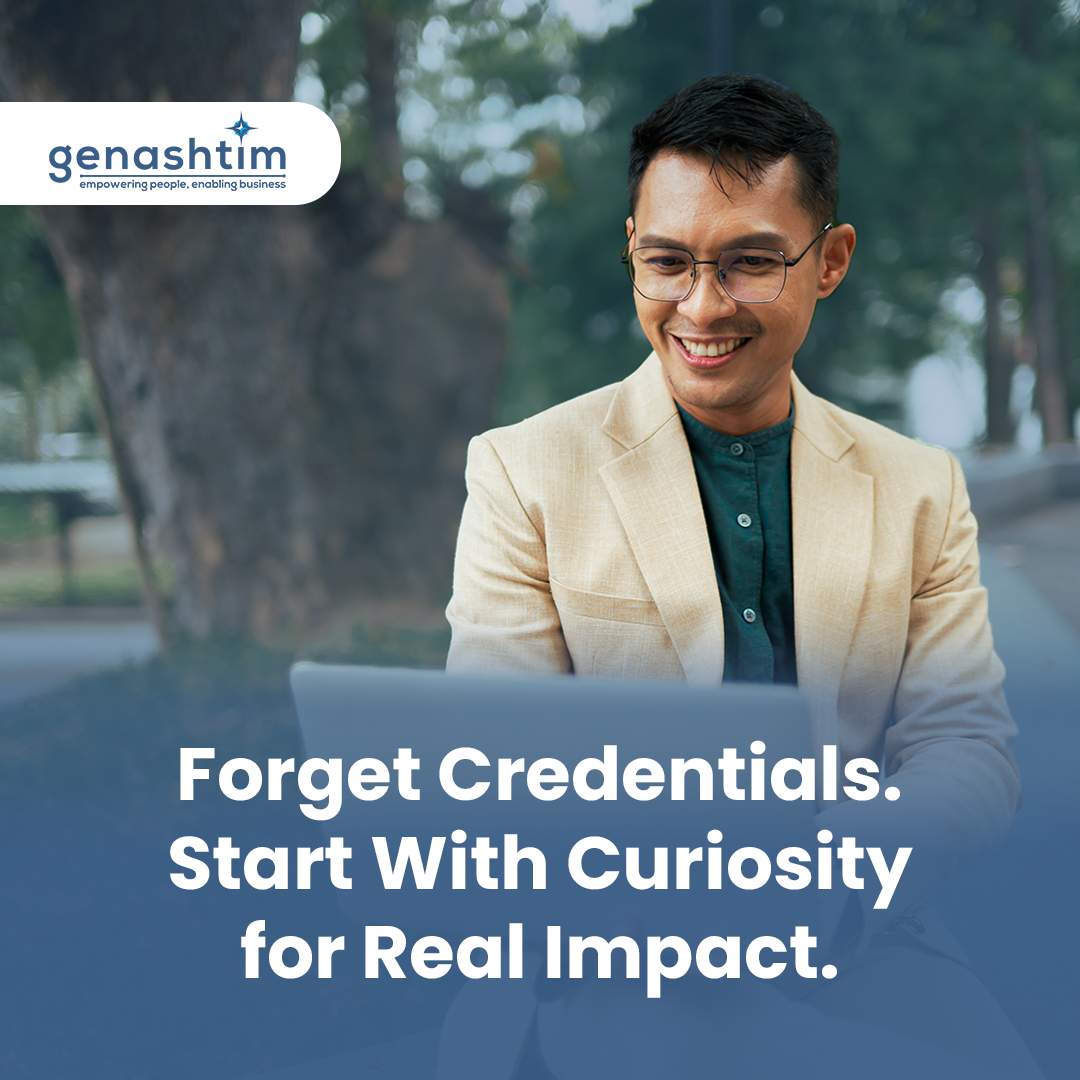
Forget Credentials. Start With Curiosity for Real Impact
Written by: Hema Krishnan
Have you ever wondered why some of the world’s biggest innovators and problem-solvers are often college dropouts?
It turns out they traded formal higher education for curiosity-driven learning – and that allows them to examine things and approach problems in unique, groundbreaking ways.
The Might of Self-Learners
Let’s take Apple’s late founder, Steve Jobs, as an example:
- Jobs learned calligraphy out of curiosity, rather than as part of a formal education subject.
- He then used these calligraphy skills to create a clean, neat, and highly readable typography for his Apple computers.
But Jobs isn’t the only autodidact who made a significant impact. Below are other notable self-taught learners who shaped our world:
- Leonardo da Vinci:
One of the greatest polymaths in history, Leonardo had very little formal schooling. Through observation and experimentation, he self-studied anatomy, engineering, painting, and science. - Sor Juana Inés de la Cruz:
A pioneering feminist icon, Sor Juana educated herself by reading extensively. She mastered literature, philosophy, the arts, math, and science – centuries ahead of her time. - Nikola Tesla:
Tesla studied engineering but never completed a degree. His groundbreaking work in electrical engineering came from self-study and experimentation. - Mary Anning:
With limited formal education, Mary taught herself geology and anatomy while collecting fossils along the coast. Her self-directed learning led to major discoveries in the field of paleontology.
The Science Behind the Success of Curiosity Learners
What classrooms can’t teach, struggle and curiosity can. Psychology backs this up.
Autodidacts display psychological traits that set them apart from professionals with formal educational backgrounds. These eight traits are visible in the work of the world’s greatest changemakers:
- Embracing Productive Confusion
- o They don’t run from confusion but sit with it and work through it.
- o The “I don’t get it yet” phase is where real learning happens.
- o Example: Nikola Tesla did a lot of experiments until his ideas clicked.
- Seeing Patterns, Not Procedures
- o They connect ideas instead of memorizing steps.
- o One concept often unlocks another in an entirely different field.
- o Example: Leonardo da Vinci saw connections between art, anatomy, and engineering.
- High Tolerance for Ambiguity
- o They are okay with not having all the answers immediately.
- o Uncertainty drives exploration rather than stopping it.
- o Example: Albert Einstein explored big questions long before clear answers came up.
- Questioning Everything (Including Themselves)
- o “Why?” is their default mindset.
- o They challenge ideas instead of accepting them at face value.
- o Example: Sor Juana Inés de la Cruz questioned societal norms and knowledge systems.
- Learning Backwards from Problems
- o They start with a goal and figure out what they need to learn along the way.
- o Learning becomes practical, not theoretical.
- o Example: Mark Zuckerberg built Facebook while learning as he went.
- Treating Failure as Data, Not Defeat
- o Failure isn’t personal; it’s just feedback.
- o Each mistake is one step closer to success.
- o Example: J.K. Rowling faced multiple rejections before Harry Potter became a global phenomenon.
- Building Knowledge Webs, Not Ladders
- o They connect ideas across different fields rather than following a straight path.
- o They understand that messy learning can be powerful.
- o Example: Mary Anning combined observation, geology, and anatomy to make groundbreaking discoveries.
- Optimizing for Understanding, Not Performance
- o They care about why something works, not just getting it right.
- o Grades aren’t important – genuine, unquenchable curiosity is.
- o Example: Louis Braille refined his system until it truly worked, not just looked good on paper.
- Embracing Productive Confusion
The Impact of Self-Directed Learning at Genashtim
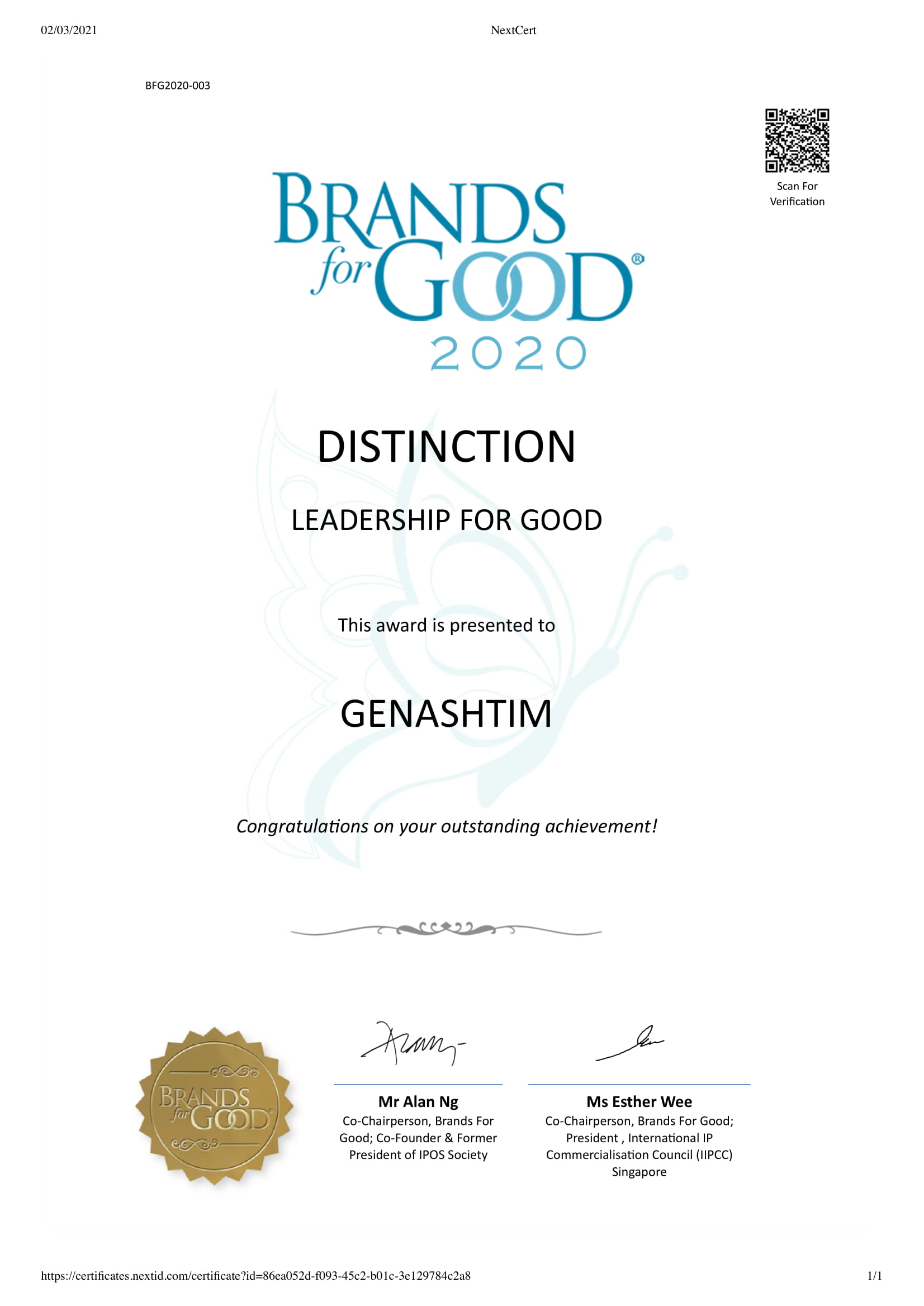
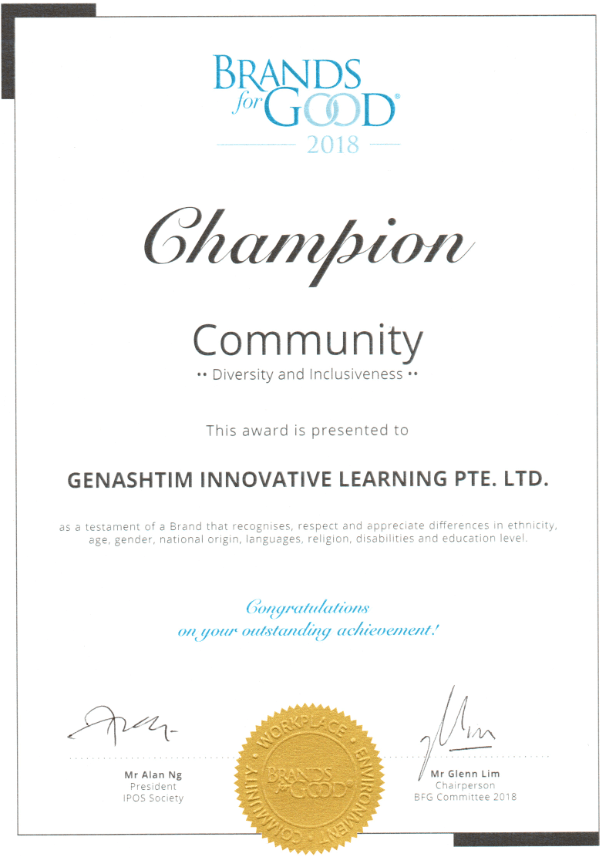
Genashtim is a for-profit social enterprise that hires disadvantaged individuals who face barriers in entering the traditional job market. Founded in 2008, the company’s mission is to empower people with disabilities (PWDs), refugees, women in oppressed environments, and veterans by providing sustainable, meaningful employment opportunities.
At Genashtim, some employees faced barriers to completing their college education due to disability, illness, or lack of support. As a result, they developed skills in ways formal education doesn’t teach.
Through unconventional learning methods, these employees not only helped keep the company afloat during its early years but also contributed significantly to its purpose-driven, people-centric growth. In addition, everyone is required to complete at least 80 hours of compulsory training. Besides the formal courses, staff are encouraged to learn related skills and build a solid knowledge web.
The very foundation of Genashtim is based on something not typically taught in classrooms. Founder and CEO Thomas Ng took a risk and experimented with remote work long before it became mainstream. His team navigated a volatile, nascent environment, aided by unconventional methods born from self-directed learning.
Conclusion: Embrace the Power of Curiosity-Driven Learning
While formal education is undoubtedly important, curiosity-driven learning offers undeniable benefits that can lead to incredible, unexpected breakthroughs.
It’s never too late to become a curiosity-driven learner rather than a curriculum-based learner. Pursue subjects of your interest and keep learning fun and enjoyable.